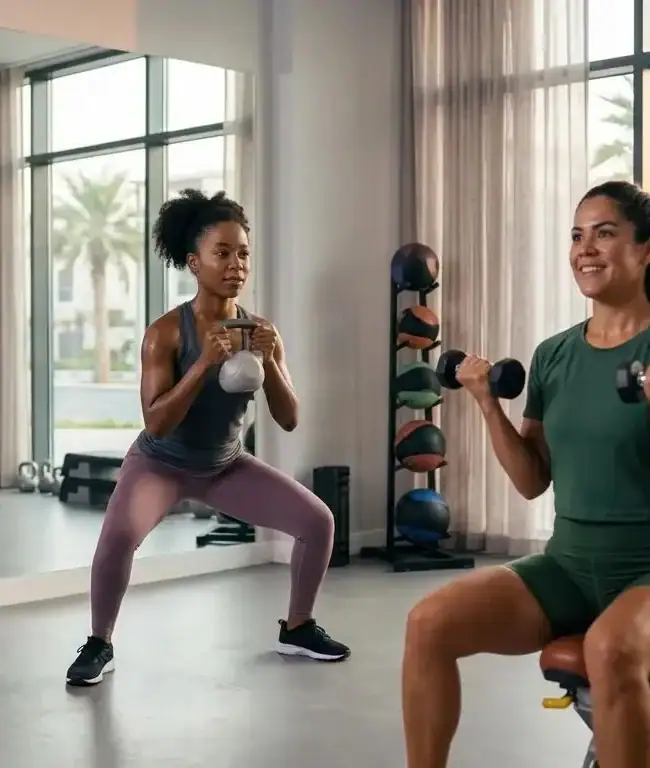



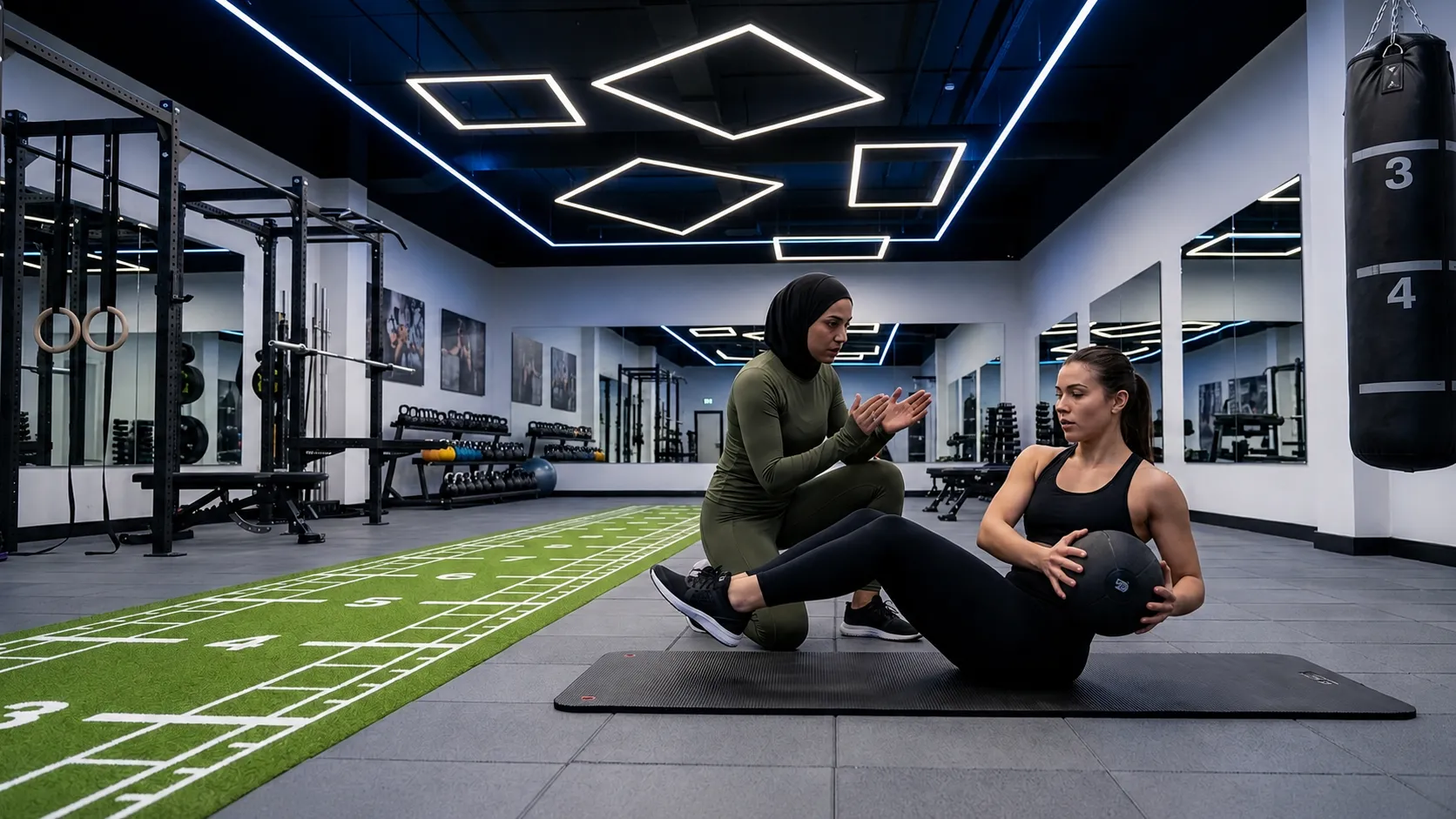
Every week, someone sends a message that essentially asks: “I’ve never lifted weights before. Can I really do CrossFit?”
The honest answer is yes. With three caveats.
Caveat one: not every CrossFit gym is set up for beginners
Some affiliates are run for competitive athletes. They’ll let you in, but the coaching is geared toward people who can already snatch their bodyweight. As a complete beginner, you’ll be lost, intimidated, and probably hurt within a few weeks.
A good CrossFit program for beginners has a fundamentals or foundations course — usually three to six sessions where a coach walks you through the basic movements before you join regular classes. That structure is non-negotiable for a true beginner. If a gym doesn’t offer it and just tells you to “jump into a class,” walk away.
Caveat two: you need to leave your ego at the door
The hardest part of CrossFit as a beginner is not the physical work. It’s the mental work of watching the woman next to you finish in five minutes when you’re still on round two. It’s lifting the empty barbell while someone has 60 kilos on theirs. It’s scaling every movement while everyone else is doing the prescribed version.
None of that matters except in your head. The point of scaling is that the workout is hard for everyone — at their level. The 60-kilo woman next to you is just as gassed as you are. You are both finishing the same workout, in different bodies, at different stages.
If you can accept that for the first three months, you’ll be fine. If you can’t, you’ll quit before the magic starts.
Caveat three: you need to commit to two or three sessions a week
Going to CrossFit once a week as a beginner is worse than not going at all. Once-a-week training means every session is your first session — you never quite remember the movements, you’re always sore, and you never build the technique base that makes CrossFit safe.
Twice a week, minimum. Three times if you can. After about six weeks, the movements start to feel familiar, you stop being permanently sore, and the workouts become enjoyable instead of survival exercises.
What your first month will actually look like
Week 1: confusion. You’ll meet your coach, learn the basics of an air squat, a deadlift, and a press. The workouts will be short. You’ll wake up sore in places you didn’t know existed (hello, hip flexors).
Week 2: less confusion. You’ll start to recognise some of the language — AMRAP, EMOM, WOD. You’ll do your first real workout for time and feel that specific kind of breathless that CrossFit produces. You’ll also wonder, somewhere mid-class, what you’ve gotten yourself into.
Week 3: small wins. You’ll lift a slightly heavier weight than last week. You’ll finish a round you couldn’t have finished two weeks ago. You’ll learn a coach’s name and they’ll learn yours.
Week 4: a shift. Something in your body will start to feel different — more capable, more responsive, more available. You won’t be able to describe it. You’ll also notice you’re sleeping better.
What you don’t need before starting
- You don’t need to be in shape. CrossFit gets you in shape.
- You don’t need to know how to lift. The fundamentals course teaches you.
- You don’t need expensive shoes or gear. Trainers and leggings are fine for the first month.
- You don’t need to be a certain age. We have members starting CrossFit in their fifties.
- You don’t need to want to compete. Most people never do.
What you do need
- Willingness to ask questions when you don’t understand a movement.
- Patience with yourself for the first six weeks while everything feels awkward.
- Honest communication with your coach about any old injuries or medical issues.
- Consistency. Two or three sessions a week, not occasional drop-ins.
- A small sense of humour about being a beginner.
The honest truth about “intimidating”
CrossFit looks intimidating from the outside. From the inside, it’s mostly normal women doing scaled versions of impressive-looking movements, cheering for each other while breathing hard. The intensity you see on Instagram is a curated highlight reel. The reality is much more human.
The first class is always the hardest. Not physically — the workout itself is scaled to your level. The hard part is walking in and realising it’s a room of people just like you, with shorter histories than they pretend. Once that registers, CrossFit becomes one of the most welcoming forms of training a beginner can choose.
Could you do CrossFit?
Almost certainly yes. The real question isn’t whether you can. The real question is whether you’ll let yourself.
Book the foundations course. Show up to the first session. Be a beginner — proudly. The rest takes care of itself.