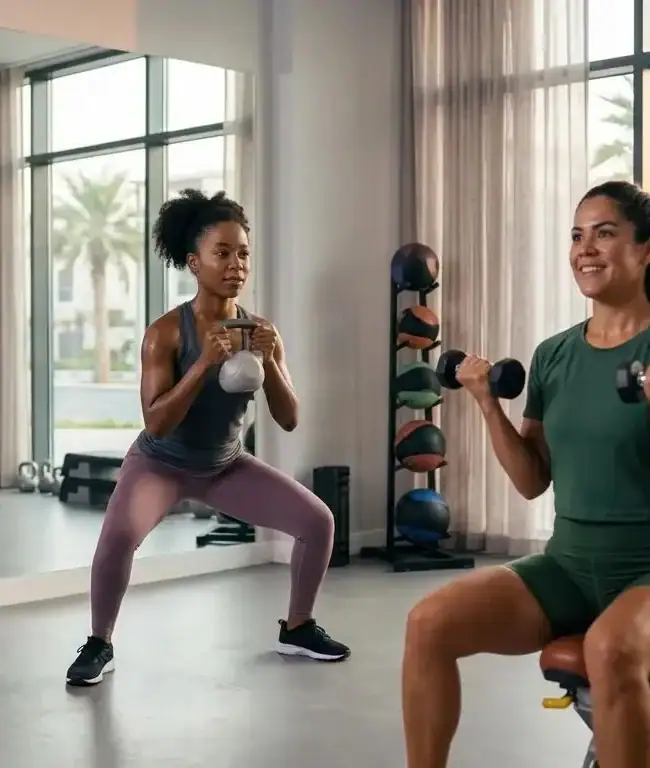


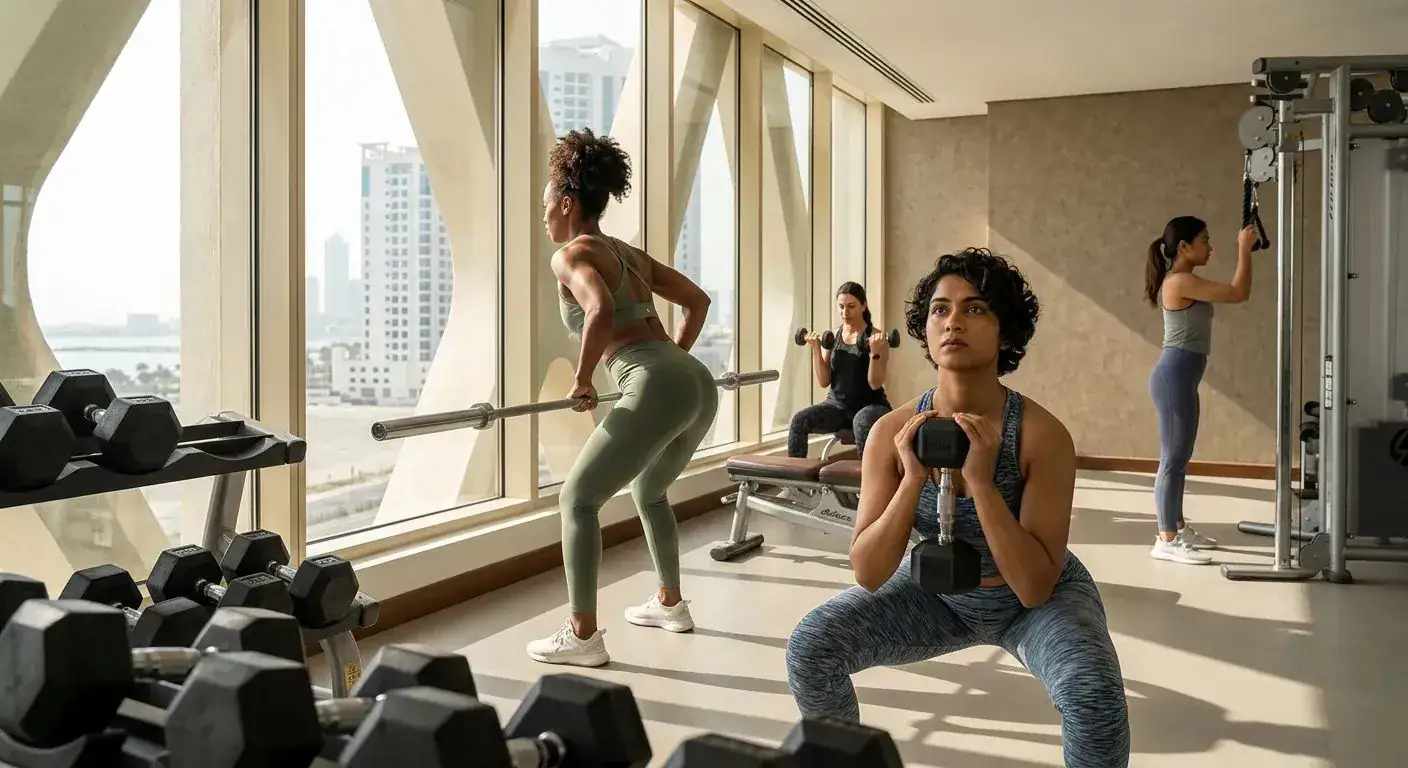
Walk past the dumbbell rack in most gyms and watch what happens. The men gravitate toward it. The women, more often than not, walk straight past — onto the treadmill, into a Zumba class, anywhere except the heavy stuff.
There is a reason. For decades, women were told that lifting weights would make us “bulky.” That we would lose our shape. That cardio was for fat loss and weights were for men who wanted bigger arms.
Almost none of that is true. And the women who figure that out — usually in their late twenties, sometimes much later — almost always say the same thing: “I wish I’d started lifting ten years ago.”
So let’s settle this properly.
The bulking myth, explained simply
Building large, visibly bulky muscle requires three things working together: a very specific training program, an aggressive calorie surplus, and high levels of testosterone. The first two are hard work. The third is, on average, around fifteen to twenty times lower in women than in men.
That is not a small difference. That is a biological gap that makes accidentally bulking up roughly as likely as accidentally running a marathon. It does not happen. Not from three strength sessions a week. Not from picking up a 10 kg dumbbell. Not from adding a barbell to your routine.
What lifting actually does is shape muscle. It tightens, defines, and builds the kind of body that looks lean in clothes and strong without them. The “toned” look that magazines have been selling women for years? That is just muscle. There is no shortcut to it that does not involve lifting something heavy.
What strength training actually gives you
Once you get past the bulking fear, the list of benefits is almost embarrassing.
1. A faster metabolism, without doing anything extra
Muscle is metabolically active tissue. The more of it you have, the more calories your body burns just sitting still. A woman with more lean muscle can eat more, recover faster, and maintain her weight more easily than a woman of the same size with less muscle. Cardio burns calories during the workout. Strength training changes the engine.
2. Stronger bones — especially after 30
Women lose bone density faster than men, particularly after menopause. Osteoporosis is not a problem we run into at 60 out of nowhere. It builds quietly through our twenties, thirties, and forties. Loading your bones with weight — squats, deadlifts, presses — is one of the few proven ways to slow that loss. Walking helps. Lifting helps more.
3. Better hormonal health
Resistance training improves insulin sensitivity, supports thyroid function, and helps regulate the hormones that govern mood, sleep, and appetite. For women with PCOS, it is one of the most effective non-medical interventions available. For women navigating perimenopause, it eases symptoms in ways that cardio alone cannot match.
4. The shape you actually want
Most women asking for a “toned” body are describing a body with more muscle and a healthy amount of fat. Cardio alone tends to shrink everything — including the parts you wanted to keep. Strength training rebuilds glutes, shoulders, and back, which is what creates the silhouette people pay personal trainers for.
5. Confidence that follows you out of the gym
This one is harder to measure, but every woman who has hit a deadlift PR knows it. There is something specific about loading a barbell with a weight that scared you last month and lifting it cleanly that does not stay in the gym. It walks into your job interview. It sits with you in difficult conversations. It changes how you take up space in a room.
Common worries, answered honestly
“But I just want to lose weight.”
Then you definitely want to lift. The most common pattern we see in women who only do cardio is rapid early weight loss, followed by a stall, followed by frustration. The body adapts. Muscle is the ingredient that keeps your metabolism from collapsing as you lose fat. Without it, the scale moves and then stops — and often, so does motivation.
“I have bad knees / a bad back.”
Most knee and back issues in women are not made worse by strength training. They are made worse by weak surrounding muscles. A coach who knows what they are doing will scale movements, change angles, and build you up safely. The goal is not to avoid loading the body. It is to load it in a way it can handle.
“Won’t I look manly?”
No. You will look like a stronger version of yourself. The women on Instagram who do look very muscular got there through years of specific training, careful nutrition, and often performance-enhancing drugs. You will not stumble into that physique by accident.
How to start, without overthinking it
If you have never lifted before, here is the entire beginner formula:
- Two to three sessions a week. Not five.
- Focus on the basics — squat, hinge, push, pull, carry.
- Start lighter than feels worth it. Master the movement first.
- Add a little weight each week. Five small jumps beat one big one.
- Eat enough protein. Rest between sessions.
If you are in Ajman, the easiest way to begin is to take a group class with a strength element — circuit training, CrossFit foundations, or the legs, glutes and abs sessions — and let a coach walk you through it. The right form on day one saves you years of bad habits later.
The bottom line
There is a generation of women who grew up believing that lifting weights would steal their femininity. It turned out to be the opposite. Strength does not take anything from us. It adds. Muscle, mood, sleep, bone density, confidence, agency. There is no version of your future self that does not benefit from being stronger.
Pick up the weight. It is yours.