


Zumba has a reputation for being either ridiculously fun or ridiculously cringe-worthy, depending on whom you ask. I’m going to argue for the first interpretation.
Zumba is one of the most underrated workouts in fitness. It looks light because everyone is smiling. It looks easy because the music is catchy and the moves seem playful. Then you do an hour of it and realise you’ve burned 500 calories, worked every major muscle group, and somehow had fun in the process.
Here’s the honest beginner’s guide.
What Zumba actually is
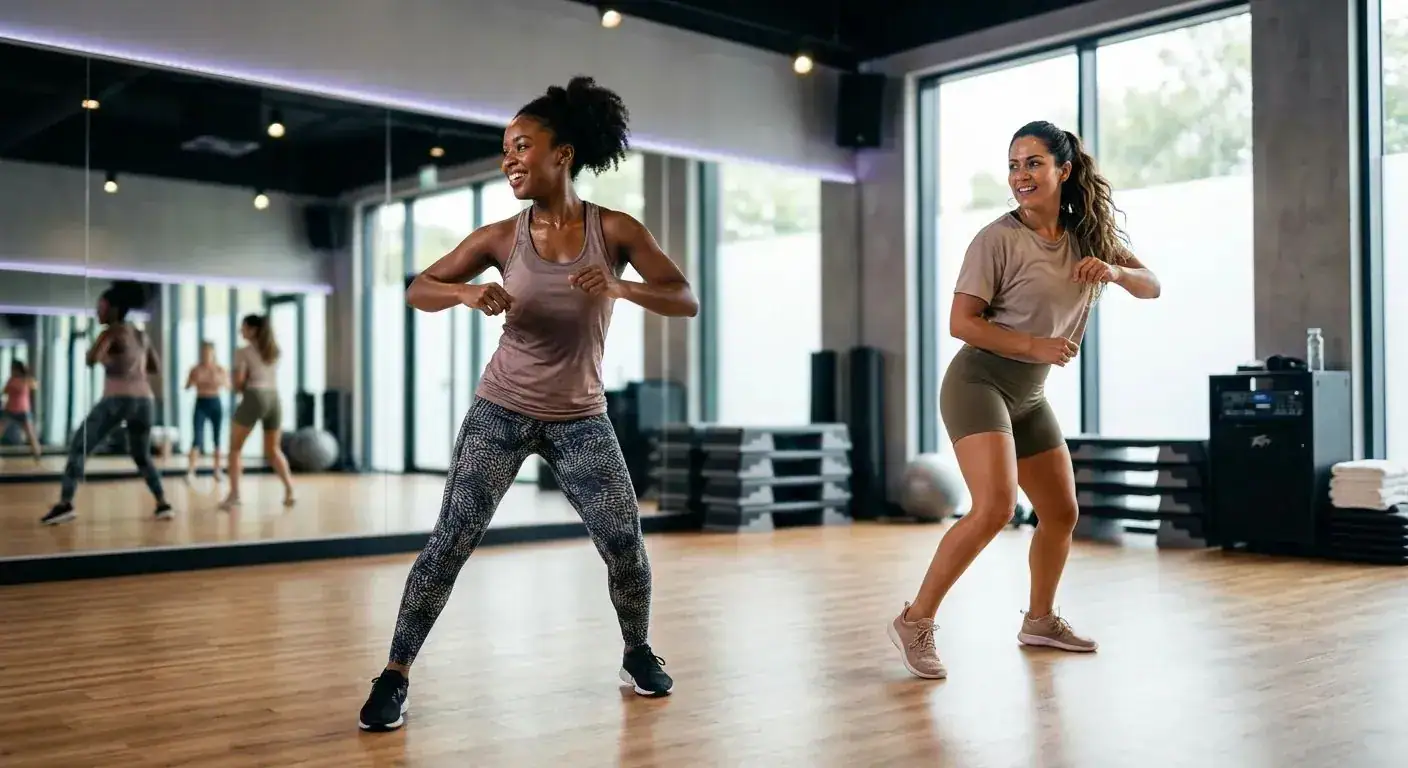
Zumba is a dance fitness class set to Latin and international music. The choreography combines elements of salsa, merengue, reggaeton, cumbia, and hip-hop with simple fitness moves — squats, lunges, jumping jacks — disguised as dance steps.
A typical class runs 50-60 minutes and follows a structure of song-based choreography. Each song has its own moves. You learn a new sequence every three minutes, dance through it, sweat, and move to the next.
Why it works as a workout
Zumba burns calories — typically 400-600 per hour for a woman, depending on intensity. That’s comparable to running or HIIT, but spread across an hour of continuous movement that doesn’t feel like exercise.
What you’re actually doing:
- Sustained cardio at varying intensities.
- Lower-body resistance through repeated squats and lunges in choreography.
- Core engagement from hip movements and rotation.
- Coordination, balance, and rhythm training.
The science says women who do dance fitness consistently see improvements in cardiovascular fitness, mood, body composition, and balance comparable to other forms of cardio. The advantage is that Zumba is easier to maintain long-term — because it’s enjoyable.
The biggest misconception
“I can’t do Zumba because I have no rhythm.”
Honestly, almost nobody has rhythm in their first class. The instructors know this. The other women in the class know this. The point of Zumba is not to look graceful. The point is to move, sweat, and have fun. If you happen to look graceful, that’s a bonus, not a requirement.
Within four or five classes, you’ll start to pick up the rhythm. The basic moves repeat across classes. Your body learns the patterns. Suddenly you’re not following the instructor frame-by-frame — you’re anticipating the next move. That moment is genuinely fun.
What to wear
- Comfortable workout clothes you can move freely in.
- Supportive sports bra (medium impact minimum).
- Trainers with good lateral support — running shoes are actually bad for Zumba because they grip too much. Cross-trainers or dance shoes are better.
- Hair tied back.
- Water bottle and a towel.
What to expect in your first class
Confusion. Genuine, embarrassed confusion. You’ll watch the instructor, try to follow, miss the steps, recover, miss again, get them right for half a song, lose them, find them again. This continues for the entire first class.
That’s the entire point. Zumba is not learnable in one session. It’s a workout in trying — and the workout in trying burns just as many calories as if you’d nailed every step.
By song three or four, you’ll stop caring whether you’re doing it right. You’ll just move. You’ll sweat. You’ll catch yourself smiling. You’ll realise the song that started 30 seconds ago has been playing for 90 seconds, and you’re tired, and somehow that’s good news.
Tips for your first month
- Stand in the back. Not because you’re hiding — because you can see everyone else and copy them.
- Don’t try to learn the moves perfectly. Try to keep moving.
- If you get totally lost, do something basic — march in place, do a side step, anything. The cardio doesn’t stop just because you’ve lost the choreography.
- Pick the same instructor for the first few classes. The choreography varies between instructors, so consistency helps you learn faster.
- Go three times in the first two weeks. You’ll see massive improvement just from repetition.
Common reasons women avoid Zumba (and why they shouldn’t)
“I’ll look stupid.”
Everyone in the room is too focused on not falling over to watch you. The instructor is too busy demonstrating to grade you. You will not look any more uncoordinated than anyone else, including the regulars who’ve been doing this for a year.
“It’s not a real workout.”
It is. Wear a heart rate monitor for one class and watch the numbers. Zumba sits in cardio zones for almost the entire hour. The lack of weights doesn’t make it less effective — it makes it different.
“I’m not Latin / I don’t dance.”
Most regular Zumba goers worldwide aren’t Latin and didn’t grow up dancing. The format was designed to be learnable by anyone. Cultural background is not a prerequisite.
“I’m over 40 / 50 / 60.”
Some of the most enthusiastic Zumba regulars at Virago are in their fifties and sixties. The energy in the room cuts across ages. The choreography can be scaled down for joint considerations. You won’t be the oldest in the class, and even if you were, nobody cares.
The benefits beyond the workout
Women who do Zumba consistently often report:
- Improved mood, especially on dark or stressful days.
- Better confidence — moving your body to music for an hour does something to your relationship with your body.
- A genuine social circle. Zumba classes build friendships faster than almost any other gym setting.
- Increased motivation to come to the gym, because they actually look forward to it.
This last point matters more than people give it credit for. The best workout is the one you do. If Zumba is the workout you’ll consistently show up for when you would have skipped HIIT, Zumba is the better choice for you. Consistency beats theoretical optimisation.
How to fit it into a balanced plan
Zumba works well as your primary cardio while doing strength training separately. A solid weekly plan:
- 2-3 strength sessions
- 2 Zumba classes
- Daily walking
This gives you the body composition benefits of strength training plus the cardio and mood benefits of Zumba, without burning out.
The honest summary
Zumba is silly, joyful, and unexpectedly effective. It’s a workout that doesn’t feel like a workout, which is precisely why women who try it tend to stick with it longer than they stuck with anything else.
Try one class. Stand in the back. Get the steps wrong. Sweat. Smile. Decide if you want to come back.
Most women do.