


I want to address this fear directly, because it stops more women from trying CrossFit than any other concern.
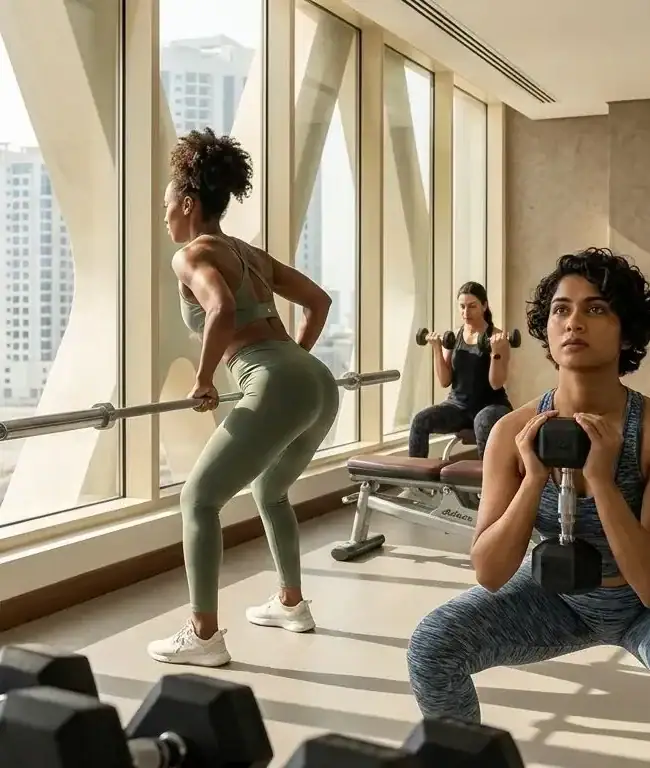
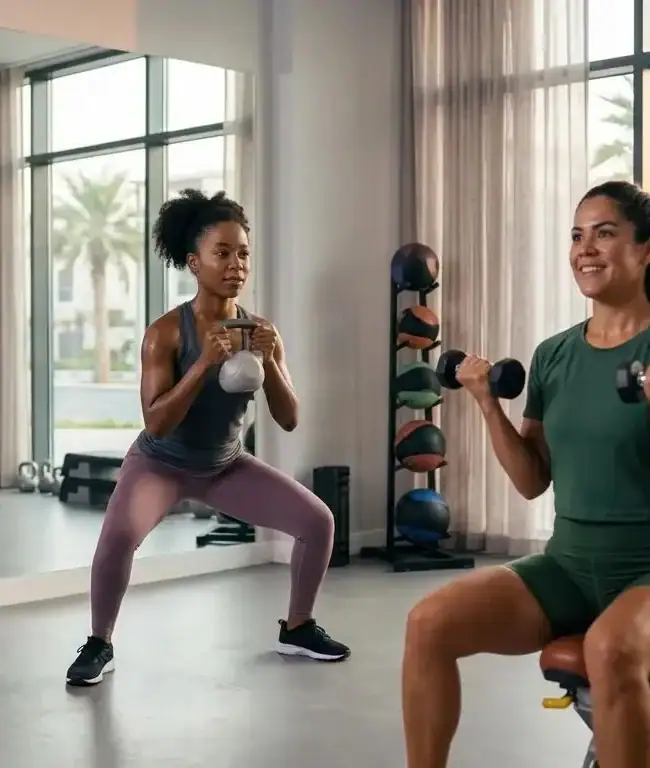
You walk past a CrossFit gym, look through the window, and see a woman with visible shoulders, defined arms, strong-looking legs. And somewhere in your head, a voice says: I don’t want to look like that. I want to be toned, not bulky.
That voice has been talking to women for decades, and it’s based on almost nothing true. Let me actually walk through what happens to a woman’s body when she does CrossFit consistently for a year — because the answer is much less scary than the fear suggests.
The first thing that happens: you get stronger
In the first three to six months of CrossFit, your body undergoes what’s called neural adaptation. Your muscles haven’t actually grown much yet — they’ve just gotten better at firing. You can suddenly lift more weight, do more reps, and last longer in workouts, even though you don’t look very different.
This is the phase where women fall in love with CrossFit. Strength gains come fast, the body feels capable, energy is up, and the scale might even go down slightly. But visually? Most women look like a slightly leaner, more upright version of themselves. Not bulkier.
The second thing that happens: subtle muscle changes
Between months six and twelve, real muscle starts to develop — modestly. You’ll notice a slight definition in your shoulders. Your arms will look a little leaner with a subtle line of muscle when you reach for something. Your glutes will lift and tighten. Your back will look more upright.
Importantly: this is what women who say they want to be “toned” are describing. Toned is just a word for visible-but-modest muscle development. CrossFit produces toned bodies in spectacular fashion. It does not produce bulky ones for women training a normal three to five times a week.
Why women don’t accidentally bulk up
Three reasons, in order of importance:
First, testosterone. Men produce roughly fifteen to twenty times more testosterone than women. Testosterone is the primary driver of large muscle growth. Without it, building visible mass is enormously slow, requiring years of dedicated effort even for men. For women, it requires near-superhuman commitment, a calorie surplus, and often pharmaceutical assistance.
Second, calories. Building substantial muscle requires eating more than you burn — significantly more. Most women, especially those interested in CrossFit for fat loss or general health, are eating at maintenance or slightly below. You cannot accidentally build a bulky physique while eating to lose weight.
Third, time. Even women who do bulk up genetically — and a tiny percentage will — take years to get there. You will notice the trajectory long before it becomes a problem and can adjust your training easily. There is no version of CrossFit where you wake up one Saturday looking like a bodybuilder.
But what about the very muscular female CrossFit athletes?
Two things to know about them. One, they’re a small minority of women doing CrossFit. Two, they got that way intentionally.
The elite competitors you see on TV train two to four hours a day, eat carefully calculated meals, supplement aggressively, and have been training for a decade or more. Many of them have genetic profiles that build muscle unusually easily. Some, at the very top level, use performance-enhancing drugs.
That is not what awaits you in a class three times a week. That’s an entirely different sport.
What “bulky” actually means
Here’s something worth examining: when women say “bulky,” they often mean different things.
Sometimes they mean visible muscle in any form — even what is objectively a lean, toned body. This fear often comes from cultural conditioning that taught us thin equals feminine, and any muscle visibility is somehow not.
Sometimes they mean specifically big shoulders or big thighs. CrossFit will modestly grow both, but “big” here is relative. “Big shoulders” for a typical CrossFit woman means the kind of small visible delts that fill out a top nicely, not a linebacker silhouette.
Sometimes they mean weight gain on the scale. This can happen — muscle is denser than fat, and you may add a kilo or two of lean tissue. Your clothes will fit better. Your shape will improve. The scale is a poor measure of body composition.
It’s worth asking yourself, honestly, which kind of “bulky” you actually fear. Often the answer is the first one — fear of visibility itself. That’s a deeper conversation about what femininity looks like, and it’s worth having.
What CrossFit actually does to your shape
In my experience coaching women through CrossFit:
- Glutes lift, become firmer and more shapely.
- Waist often gets smaller as core strength improves and posture changes.
- Shoulders develop modest definition that looks beautiful in dresses.
- Arms tighten and develop a subtle line — usually appreciated, not feared.
- Legs become more athletic-looking — leaner at the calves, more defined at the quads.
- Back posture transforms. Many women look two inches taller after six months.
None of this is bulky. All of it is, by most descriptions, the body people pay personal trainrs to give them.
If you’re still worried
Try CrossFit for three months and see what happens to your body. If at any point you feel you’re getting bigger than you want, the solution is simple: reduce calories slightly, do more conditioning, less heavy lifting. Your body responds to inputs. It is not on a runaway train.
But I’ll bet a coffee that three months in, you’ll be more worried about the opposite — wanting to keep the changes going.
That’s the real conversation almost every woman ends up having with CrossFit. Not “how do I avoid getting bulky.” More like “how do I keep getting stronger.”
The fear melts as soon as you see what your body actually does. Trust the process. Pick up the barbell.