


The first question new members at Virago ask me is rarely about workouts. It is about clothes.
“What do I wear?” “Is it okay if I cover?” “Can I train in long sleeves?” “What if I sweat through everything?” These are real, practical concerns, and they deserve a real answer instead of a generic Pinterest board.
This is the guide I wish someone had given me when I first started training in the UAE.
The two non-negotiables: comfort and movement
Forget aesthetics for a second. The two questions every gym outfit needs to answer are: can I move freely in it, and will I still want to be wearing it in thirty minutes?
A pair of leggings that looks great in the mirror but rolls down every time you squat is a bad pair of leggings. A top that is gorgeous but ride up during a plank is not workout wear, it is going-out wear. Comfort comes first. Style follows.
Bottoms: what works in a UAE gym
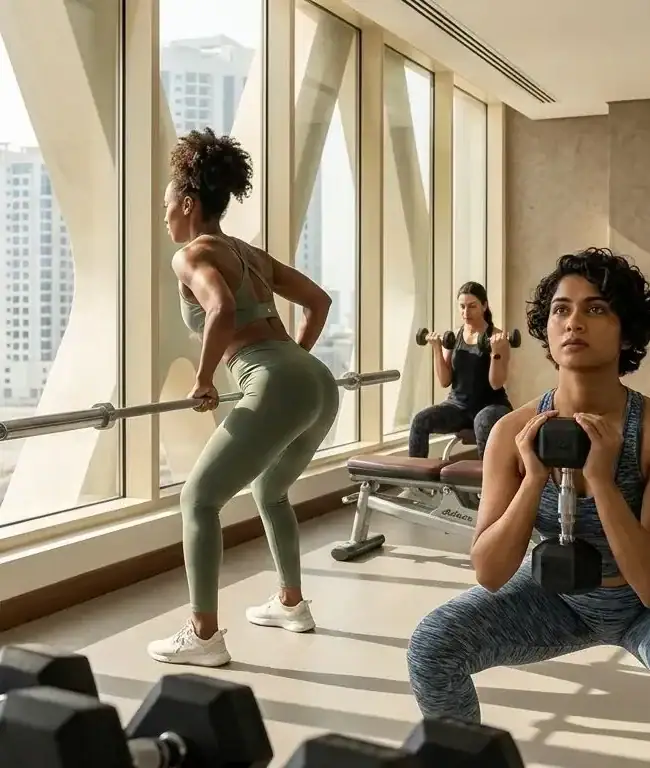
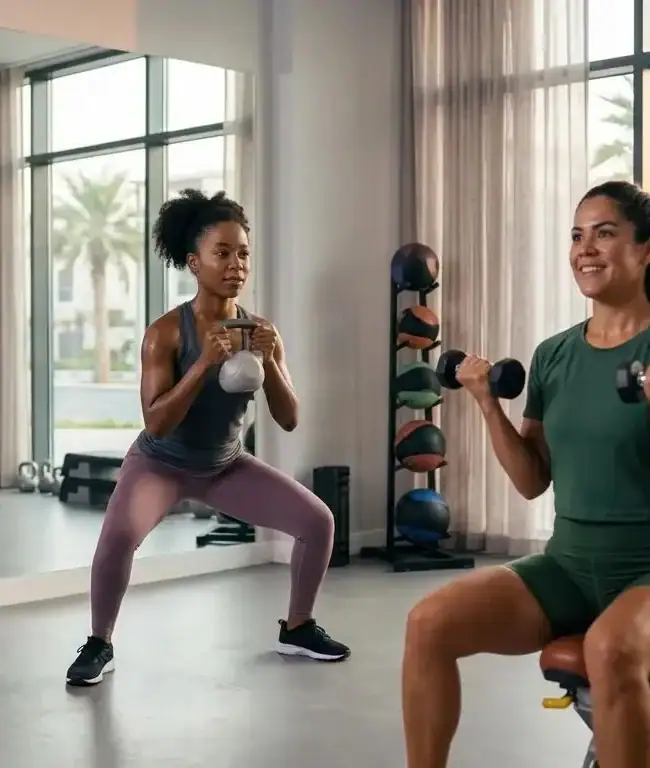
Full-length leggings are the most popular choice at Virago, and for good reason. They keep your legs cool indoors (counterintuitively — they protect from over-air-conditioning), they don’t shift around during deadlifts and squats, and they offer the modest coverage many women prefer.
Look for:
- High-waisted, with a wide waistband that doesn’t fold down when you bend.
- Squat-proof fabric. Bend over in front of a mirror in the changing room before buying. If you can see through it, it’s not gym-grade.
- Four-way stretch. Lycra-blend or technical fabric, not regular cotton.
- Inner pocket for keys or a small phone, ideally on the waistband.
Avoid: cotton leggings (they get heavy when wet), anything with metal hardware that digs in when lying on a mat, and bottoms that require constant adjusting.
Tops: covering without overheating
This is where the UAE heat plays a real role, even though you’ll be training indoors in cold air-conditioning. Most gym buildings are heavily air-conditioned, so women who train long-sleeved are often more comfortable than women in tank tops.
Good options:
- Loose-fitting long-sleeve sports tops in moisture-wicking fabric. Breathable, modest, and surprisingly cool.
- Fitted long-sleeve compression tops if you prefer a closer feel — they actually help with sweat management.
- T-shirts over a sports bra, in a fabric that doesn’t cling when wet.
- Sports hoodies for warm-ups in cooler classes (Pilates studios in particular can run cold).
Avoid: heavy cotton t-shirts (they get clammy fast), anything sheer when sweaty, and tops short enough to ride up during overhead movements unless you don’t mind it.
Sports bras: the single most important purchase
If you spend money on one piece of gym gear, make it the sports bra. A bad sports bra will end your workout faster than a bad mood. Here is the simple framework:
- Low impact (Pilates, yoga, walking): a basic supportive top is fine.
- Medium impact (strength training, light cardio): an encapsulation bra with proper shoulder straps.
- High impact (running, HIIT, Zumba, boxing, jumping): a high-support bra, ideally with thicker straps and an underbust band.
Bigger-busted women should not feel limited to ugly options. Brands like Shock Absorber, Triumph, and Anita are widely available in the UAE and stock real sizes properly.
For women who wear hijab
Sports hijabs are genuinely worth the investment. Regular scarves slide, bunch, get heavy with sweat, and need constant adjustment mid-workout. A proper sports hijab solves all of those problems.
Look for:
- Lightweight, breathable fabric. Polyester-spandex blends work better than cotton in the heat.
- Snug fit at the neckline so it doesn’t shift during cardio.
- Pull-on or hooded styles, which stay put better than wrapped styles for high-intensity work.
Nike, Adidas, and Asiya all make solid options. Local brands like Veiled Sport also do well. Bring two — one to train in, one in your bag — because they get sweat-soaked fast.
Shoes: not glamorous, but critical
Forget how they look. Think about what you do in them.
- Mostly cardio, dance, Zumba: cross-trainers with good cushioning.
- Mostly weight training: flat, firm-soled shoes — Converse, Vans, or proper lifting shoes. Cushioned runners are actually a bad fit for heavy lifts.
- Mostly group classes (mixed): a hybrid cross-trainer that handles both jumping and lifting.
- Pilates: nothing. Bare feet or grip socks.
Whatever you choose, break them in before your first session. A new pair of trainers and a HIIT class on the same day is a blister recipe.
Practical extras that make a difference
- A microfibre towel — small, dries fast, fits in your bag.
- A second top to change into after class if you’re heading anywhere else.
- Hair ties, plural. You will lose them.
- Deodorant kept permanently in your gym bag.
- A small bag of toiletries if you shower at the gym.
A note on “matching sets”
If matching gym sets make you feel good, wear them. They are not necessary, and they do not make anyone train harder, but if a coordinated outfit gets you out the door more often, that is a legitimate reason to own one. The point of gym clothes is not to impress anyone in the gym. The point is to get you to the gym.
Final thought
Your first month, wear what you already own. See what works, see what doesn’t, see what you reach for and what stays in the drawer. Then, around week six, when you actually know your training style, invest in two or three good pieces that fit your body and your routine.
Buying a full new wardrobe before you start is the most common form of pretend-progress. The real progress is sweating through the cheap leggings you already have.