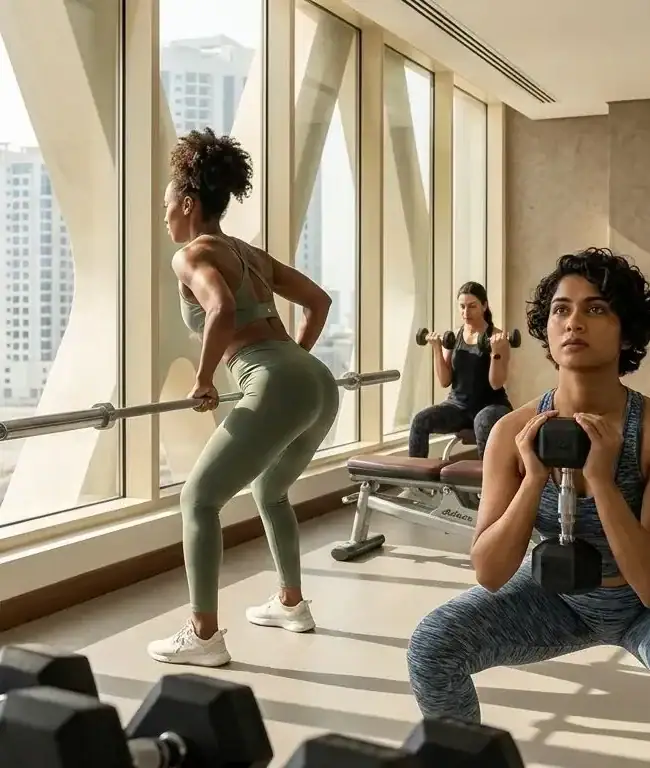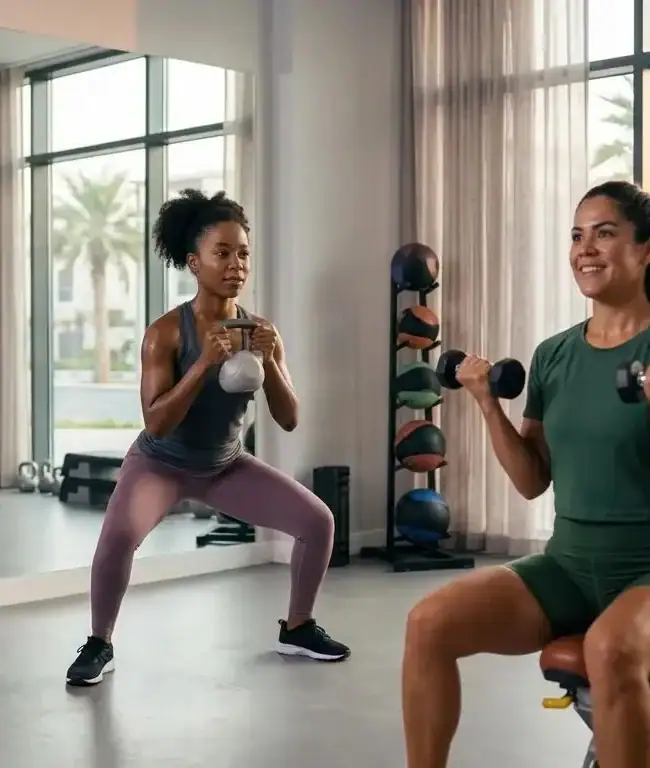



The first time I trained in a women-only gym, I cried in my car afterwards.
Not because anything sad had happened. The opposite. It was the first time in years I had worked out without scanning the room. Without choosing the corner machine so nobody would watch me squat. Without wearing an extra layer in 40-degree heat. I had not realised, until I didn’t have to do it anymore, how much energy I’d been spending on not being seen.
That is the part nobody warns you about when you join a women-only space. The relief is not just physical. It is mental. And once you have felt it, going back to a mixed gym feels like wearing shoes that don’t quite fit.
It is not just about modesty
People sometimes assume the appeal of a ladies gym is purely cultural — that it is mostly for women who cover, or for women whose families prefer it. Those women are absolutely part of our community at Virago, and the space serves them properly. But that is one reason out of many.
Other women come because they were stared at in mixed gyms. Some come because a man once tried to give them unsolicited form advice, or worse, took their photo. Some come because they want to train hard without having to be polite about it. Some come because they grew up athletes and miss the locker room feeling. And plenty come for reasons they don’t fully articulate. They just feel better here.
All of those reasons sit comfortably in the same room.
What actually changes when men are not in the room
It is hard to describe until you experience it, but here are the things almost every woman notices in her first week:
- You walk to the dumbbell rack without thinking about it. No mental detour to the cable machine because someone is hovering by the weights.
- You wear what you actually want to wear. Tight, loose, hijab, sports bra — your call, not a calculation.
- You make ugly faces under heavy lifts. You grunt. You laugh too loud after a hard set. Nobody minds.
- You ask questions you would have been embarrassed to ask before. “Is this how a deadlift is supposed to feel?” “Why do my hips hurt in that position?” The questions get answered.
- You stop comparing your body to the woman next to you, because she is busy too.
Why this matters more than people admit
There is research on this — women in single-sex training environments tend to train harder, lift heavier, and stay consistent for longer. But the numbers miss the texture of why.
Most women have spent their lives being watched. In school, on the street, at work, online. The gym is one of the few places where you are supposed to be focused entirely on yourself, and a mixed environment pulls you back into being observed. A women-only space removes that pull. What is left is just you, your body, and what you are trying to do with it.
That is not a small thing. That is a different kind of workout.
The community part
The other piece is harder to plan and easier to feel. Women in a women-only gym talk to each other. They share workouts, recipes, baby news, divorce stories, job interviews. They cheer when someone hits a new PR. They notice when someone has not been around for a few weeks.
It is not engineered. It just happens, because the room makes it safe to let your guard down a little.
Most of our long-term members did not come for the community. They came for the workouts. The community is what kept them.
If you have only ever trained in mixed gyms
Try a single trial day. That is all I can really recommend. Read every article you want, watch every video — none of it lands until you walk into a room of women working hard and realise you don’t have to perform for anyone.
Some women come once and decide it’s not for them. That is fine. The space is not for everyone. But most of the women I see walking out of a first session look slightly different than the ones who walked in. A little taller. A little softer in the shoulders. Sometimes, a little teary.
That is the thing about a room full of women. You always feel it after you leave.